

To install or reinstall the missing Microsoft Store on Windows 10 or 11, open PowerShell as administrator and run wsreset -i — this downloads and installs the Store directly from Microsoft’s servers. If that does not work, you can use WinGet (winget install 9WZDNCRFJBMP), the Xbox app’s built-in dependency installer, or my free tool Winhance which handles everything through a simple interface.
Applies to: Windows 10 (22H2) and Windows 11 (23H2, 24H2, 25H2) | Last updated: March 31, 2026
Key Takeaways
- The
wsreset -icommand is the fastest way to reinstall Microsoft Store — one command in PowerShell, no extra tools needed - WinGet can reinstall the Store with
winget install 9WZDNCRFJBMPon both Windows 10 and 11 (WinGet comes pre-installed on Windows 11, may need manual install on Windows 10) - Winhance provides a one-click GUI that handles WinGet installation and Microsoft Store reinstallation automatically
- The Xbox app method works as a fallback — install the Xbox app from Xbox.com and use its Settings to install the Store as a dependency
- All methods work on LTSC, IoT, and modified Windows editions like UnattendedWinstall where the Store is not included by default
Quick Steps:
- Right-click the Start button and open PowerShell (Admin) or Terminal (Admin)
- Type
wsreset -iand press Enter - Wait 2-3 minutes for the Store to download and install
- Check your Start menu — Microsoft Store should now be listed
- If
wsreset -ifails, trywinget install 9WZDNCRFJBMPinstead
In This Guide
This guide covers four different methods to reinstall the missing Microsoft Store on Windows 10 and Windows 11:
- Method 1: wsreset — The fastest option. A single command that re-registers the Store.
- Method 2: WinGet — Install the Store from the command line using Windows Package Manager.
- Method 3: Winhance — A GUI option that installs the Store with a few clicks.
- Method 4: Xbox App — Installing the Xbox app forces the Store to come along with it.
Why Does the Microsoft Store Go Missing?
From years of working in computer repair, I can tell you the most common reasons the Microsoft Store disappears: someone removed it intentionally using a PowerShell command, it got corrupted during a Windows update, or you are running a Windows edition that does not include it by default (like IoT Enterprise LTSC or a customized installation).
Whatever the reason, Windows does not give you a straightforward “reinstall” button in Settings. That is why I have put together every reliable method I know of in this guide. Start with Method 1 and work your way down if needed.
Method 1: Reinstall Microsoft Store With wsreset (Fastest)
The wsreset tool is built into Windows and can silently download and install the Microsoft Store from Microsoft’s servers. This is the quickest method because it requires no extra software — just a single PowerShell command.
- Right-click the Start button and select PowerShell (Admin) or Terminal (Admin)
- Type the following command and press Enter:
wsreset -i- Wait a few minutes — there is no progress bar, but the Store is downloading in the background
- Open the Start menu and look for Microsoft Store in your app list
Tip: Make sure you are connected to the internet before running this command. Without a connection,
wsreset -iwill fail silently.
If wsreset -i does not work on your system, move on to Method 2 below.
Method 2: Use WinGet to Install the Microsoft Store
WinGet is Microsoft’s official package manager for Windows. The Microsoft Store has its own WinGet package ID, so you can install it with a single command. I stumbled upon this method while building Winhance, and it has become my go-to recommendation because it works consistently across every Windows version I have tested.
Check if WinGet is installed
On Windows 11, WinGet is pre-installed. On Windows 10, you may need to install it first. Open PowerShell and type:
wingetIf you see a list of WinGet commands, it is ready to go. If you get an error saying the command is not recognized, you need to install WinGet first.
Install WinGet on Windows 10
Run this PowerShell command (provided by Microsoft on the official WinGet documentation page) to install WinGet on Windows 10:
$progressPreference = 'silentlyContinue'
Write-Host "Installing WinGet PowerShell module from PSGallery..."
Install-PackageProvider -Name NuGet -Force | Out-Null
Install-Module -Name Microsoft.WinGet.Client -Force -Repository PSGallery | Out-Null
Write-Host "Using Repair-WinGetPackageManager cmdlet to bootstrap WinGet..."
Repair-WinGetPackageManager
Write-Host "Done."
Install Microsoft Store with WinGet
Once WinGet is available, right-click the Start button, open Terminal (Admin) or PowerShell (Admin), and run:
winget install 9WZDNCRFJBMPWhen prompted to accept the package agreements, type Y and press Enter. The installation takes about a minute. Once it finishes, you will see a success message and the Microsoft Store will appear in your Start menu.

Note:
9WZDNCRFJBMPis the official Microsoft Store package ID. This is the same package WinGet uses internally — it is completely safe.
Method 3: Use Winhance to Install the Microsoft Store (GUI)
If you prefer not to use the command line, my free Windows enhancement utility Winhance can handle the entire process through a graphical interface. Winhance automatically installs WinGet if it is missing (common on Windows 10) and then uses it to install the Microsoft Store. You do not need to touch PowerShell at all.
- Download Winhance from winhance.net and install it
- Open Winhance and navigate to the Windows apps and features section
- Find Microsoft Store in the list — it will have a red indicator if it is not installed
- Select it and click Install Selected Items
- Click Yes to confirm
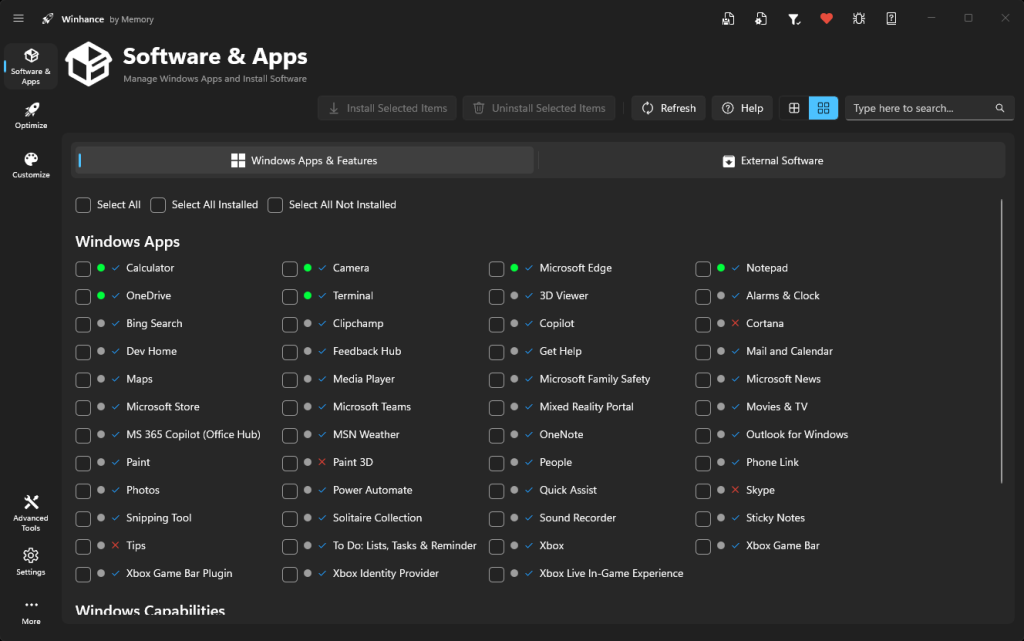
Winhance will handle everything automatically. Once it is done, the status indicator turns green and the Microsoft Store is ready to use from your Start menu.
Tip: If you see a SmartScreen warning when running Winhance, click “Run anyway.” The application is safe — you can verify the source code on GitHub.
Method 4: Install via the Xbox App
The Xbox app for Windows lists the Microsoft Store as a required dependency. This means you can install the Xbox app first and then use it to pull in the Store. This method is especially useful if both WinGet and wsreset are not working on your system.
- Open your browser and go to Xbox.com (or search “Xbox app for Windows”)
- Scroll down and click Download the app
- Run the installer, accept the terms, and click Install
- When the Xbox app opens, click Browse the Catalogue
- Look for a banner at the top about missing components — click Review Now
- If no banner appears, click the sign-in area, then go to Settings > General
- Find Microsoft Store in the dependency list and click Install
- Wait for the notification confirming the Store has been installed

You do not need a Microsoft account to use this method — just skip the sign-in and go to Settings directly. Once the Store is installed, you can uninstall the Xbox app through Settings > Apps if you do not plan on using it.
Tip: If the Xbox app installer will not run, right-click the downloaded file and choose Run as administrator. If it still fails, you can install it through UniGetUI instead — search for “Xbox” in the Discover Packages tab.
How to Fix the Microsoft Store if It Is Installed but Not Working
If the Microsoft Store is present on your system but will not open or keeps crashing, the methods above are for reinstalling a missing Store. For a broken Store, try these troubleshooting steps in order.
Run the Windows Store Apps Troubleshooter
Open the search bar and type “Troubleshoot.” Select Troubleshoot Settings, then click Additional Troubleshooters (or Other troubleshooters on Windows 11). Find Windows Store Apps and run it. This tool checks for common issues and applies fixes automatically.
Re-register the Store with PowerShell
If the troubleshooter does not fix it, open PowerShell as admin and run this command to re-register the Microsoft Store for all users:
Get-AppXPackage *WindowsStore* -AllUsers | Foreach {Add-AppxPackage -DisableDevelopmentMode -Register "$($_.InstallLocation)\AppXManifest.xml"}Then reset the Store cache by running:
wsreset.exeThe Microsoft Store should open automatically after the reset completes. The wsreset.exe command clears the Store cache without changing your account settings or deleting installed apps.
Uninstall and reinstall the Store completely
If the Store is still broken after re-registering, remove it completely and install it fresh. Open PowerShell as admin and run:
Get-AppxPackage -allusers *WindowsStore* | Remove-AppxPackageThen use any of the installation methods from earlier in this guide (I recommend winget install 9WZDNCRFJBMP) to install a clean copy of the Store.
Last resort: In-place upgrade
If nothing else works, an in-place upgrade will repair your entire Windows installation without affecting your files or apps. This reinstalls all system components including the Microsoft Store. Download the Windows ISO from Microsoft’s website, mount it, and run setup.exe — choose to keep your files and apps when prompted.
Frequently Asked Questions
Does this work on Windows 10 LTSC and IoT editions?
Yes. All four methods work on LTSC, IoT Enterprise, and other editions where the Microsoft Store is not included by default. I have tested these methods on IoT Enterprise LTSC specifically and they work reliably.
Will reinstalling the Microsoft Store delete my existing apps?
No. Reinstalling the Store does not touch any apps you already have installed. The Store is just the platform — removing and reinstalling it does not affect what was downloaded through it.
Do I need to restart my computer after installing the Microsoft Store?
No. The Microsoft Store is available immediately after installation completes. You can open it right away from the Start menu without a restart.
What if WinGet is not recognized on my Windows 10 system?
WinGet is pre-installed on Windows 11 but may be missing on Windows 10. You can install it using the PowerShell script in Method 2, or use Winhance (Method 3) which automatically installs WinGet for you before proceeding with the Microsoft Store installation.
Can I use these methods to fix an existing broken Microsoft Store?
Yes. If your Store is installed but not working, check the troubleshooting section above. Start with the Windows Store Apps troubleshooter, then try re-registering with PowerShell, and if that does not work, uninstall and reinstall it completely using the methods in this guide.


OK,
thanks a lot